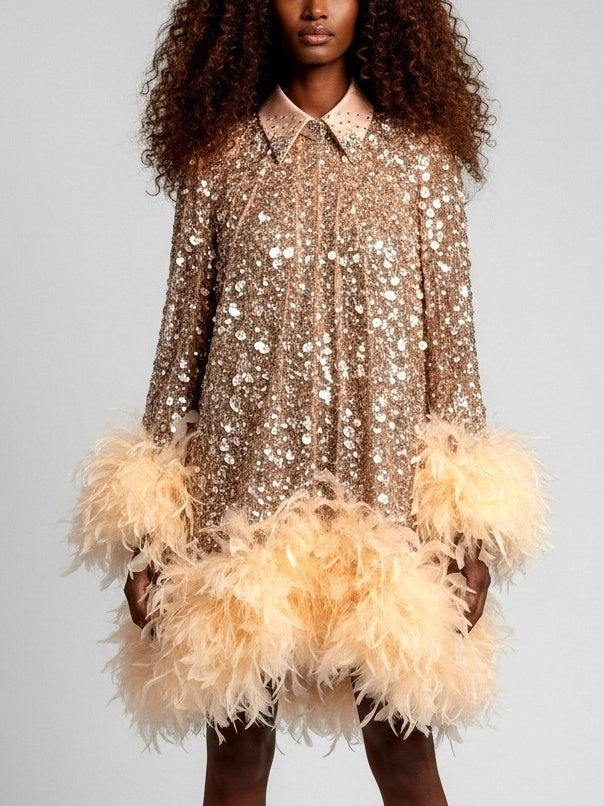
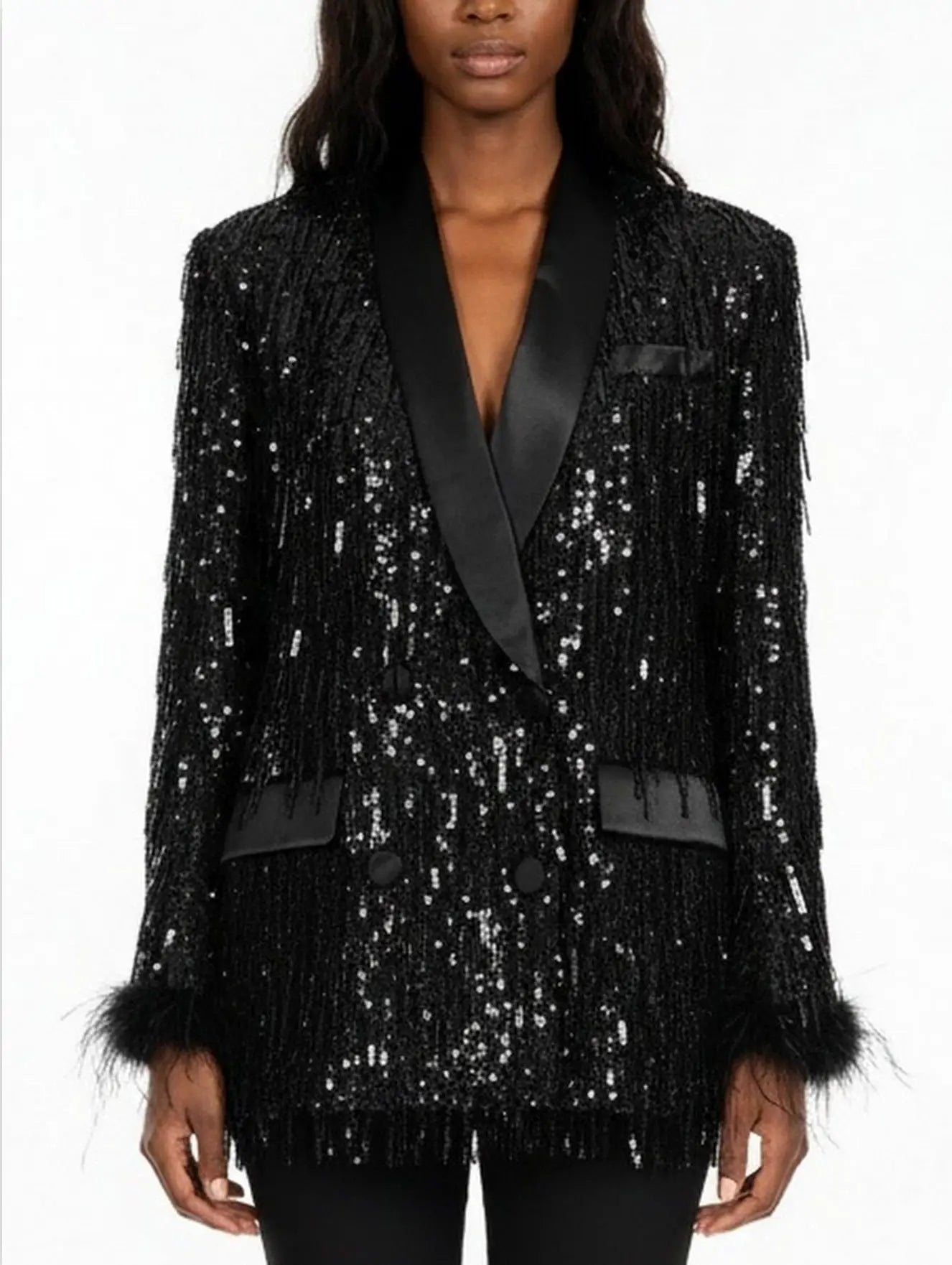
Tailored silhouettes often rely on clean lines and structure, but embellishment can completely transform their character. When sequins are layered across a classic blazer shape, the result feels far more expressive than traditional tailoring. Light catches on the surface with every movement, turning what would normally be a restrained piece into something far more visually dynamic.
The addition of feather cuffs introduces another layer of texture, softening the structured outline of the jacket while adding subtle motion. Elements like these show how designers can take familiar shapes and give them new energy through surface detail. Instead of relying solely on cut or silhouette, the focus shifts to the way texture, shine, and movement interact across the garment.
When Texture Becomes the Most Interesting Detail
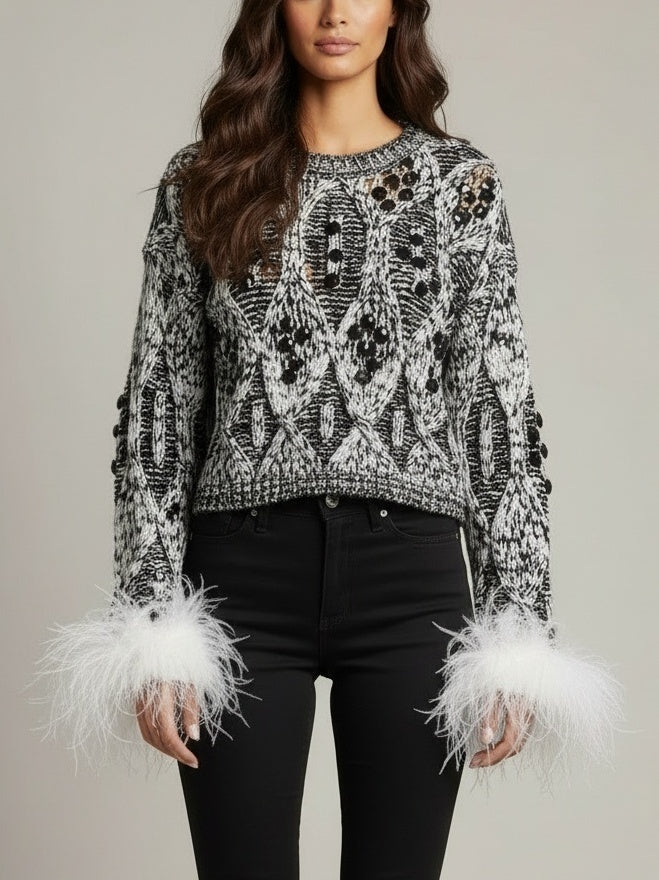
Not every use of sequins or embellishment appears in traditional eveningwear. Sometimes these details are introduced into more relaxed pieces, where the contrast between texture and simplicity becomes the most interesting part of the design. A knit silhouette provides a familiar foundation, allowing decorative elements to stand out even more clearly.
Feather cuffs add softness and movement to the sleeves, creating a visual break from the knit structure of the garment. Small reflective embellishments across the surface introduce subtle sparkle without overwhelming the piece. Designs like this show how texture alone can transform an otherwise simple shape into something visually distinctive.
Feathers That Bring Movement to a Dress

Feathers have long been used in fashion to introduce movement and texture. Unlike many decorative elements that remain fixed, feather trim responds naturally to motion, creating subtle shifts in shape and volume as the wearer walks or turns.
In this design, the feathered skirt becomes the central visual feature, adding depth and softness beneath the structured bodice. The contrast between the more defined upper portion of the dress and the fluid movement of the feathers creates a balanced silhouette. Pieces like this demonstrate how texture alone can change the way a garment behaves and how it is perceived in motion.
Sequins and Feathers in Bold Color

Color can change the entire impact of a design, especially when paired with reflective embellishment. In this dress, the vivid magenta sequins create a surface that catches light continuously, giving the fabric a shifting, almost liquid appearance as it moves.
The feather trim adds contrast to the shine of the sequins, introducing texture and movement at the edges of the silhouette. This combination highlights how two very different materials - reflective sequins and soft feathers - can work together to create visual depth. When paired with strong color, the result becomes even more noticeable, allowing the textures to stand out clearly against the bold backdrop.
Sequins and feathers have remained part of evening fashion for decades, largely because of the visual energy they bring to clothing. Sequins interact with light in a way that creates constant movement across the surface of a garment, while feathers introduce softness and motion that changes with every step. Together, these elements create garments that feel dynamic and expressive.
Designers continue to revisit these materials because of how effectively they transform a silhouette. Whether used sparingly on cuffs and trims or layered across an entire dress, sequins and feathers can shift a piece from simple to striking through texture alone. The combination highlights how surface detail, movement, and light can influence the way clothing is perceived.
Related reading:
The Kind of Dresses People Remember
Explore more styles: